Who was Peter Bock-Schroeder?
Peter Bock-Schroeder’s story reads a bit like a movie; larger than life with plenty of plot twists. His passion for photography, his interest in politics and history and above all his humanity provide his pictures with a unique signature.
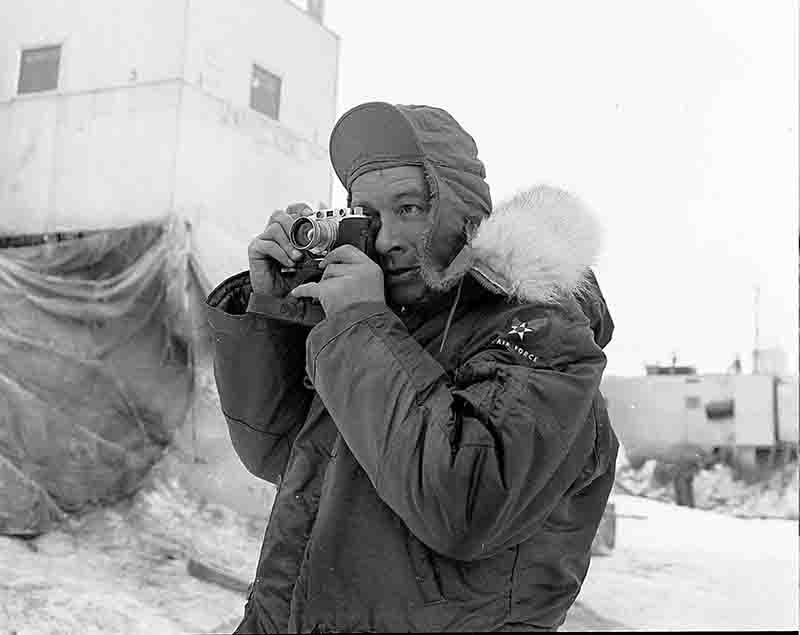
What counts is the perception, the eye.
Bock-Schroeder's work emphasises not the spectacular but the subtle, the eye for the invisible within the visible. He believed in the honesty of light and worked with a patience now rare: wait, observe, capture.
Peter Bock-Schroeder rejected every form of staging. His camera was not an instrument of ideology but of enlightenment.
He believed in documentary dignity, an attitude grounded in respect for the subject. Those who look at his photographs quickly recognise that they do not aim for effect.
"Not cute and playful but uncontrived and honest. The landscape deserves to be photographed the way it presents itself to us" - Peter Bock-Schroeder, Disturbed Landscapes, 1964
Style and Method: Precision as Attitude
Bock-Schroeder worked with analogue cameras: Rolleiflex (primary instrument), Leica and later Hasselblad. He preferred Agfa film of low sensitivity (25–50 ASA). This technical discipline demanded exact exposure and quiet, patient observation.
His compositions are clear, symmetrical, structured. His style was factual and dignified. He photographed people with respect, never voyeuristically. Unlike many of his contemporaries, he did not seek sensation but stillness within the moment, the quiet momentum of the real.
Market & Collector Value 2026
- Vintage Prints (original prints by Peter Bock-Schroeder): 12,000–25,000 USD
- Soviet Union Boxed Edition (limited, original negatives): 17,000 EUR
- Institutional holdings: MFAH Houston (Celilo Falls, Oregon 1956) & Princely Collections Liechtenstein
- All prints include Certificate of Authenticity (COA) & provenance documentation
- Unpublished negatives available to museums and research institutions on request
Biography: The Path of a Chronicler
A documented life-line from Hamburg to Munich, the key stations of an extraordinary photographic career.
Under a cultural agreement between West Germany and the USSR, he becomes the first West German photojournalist permitted to work in the Soviet Union. The journey takes him through 11 Soviet republics, from Moscow and Leningrad to Azerbaijan, Armenia, Georgia, Uzbekistan and the Baltic states. He photographs the Bolshoi Theatre, the Hermitage in Leningrad and Orthodox services at the Trinity Lavra of St. Sergius.
The long-awaited fine art photography book "The Soviets" is published in 2026 with 90 curated images from original negatives of the historic 1956 Soviet Union assignment. Simultaneously, the Bock-Schroeder Edition 2026, a curated selection of fine art prints spanning the entire body of work, becomes available.
An Archive as a Time Capsule
After his death in 2001, his son Jans Bock-Schroeder took over the management of the estate. Under the name Collection Bock-Schroeder, an institution emerged that not only preserves photography but researches it systematically.
The archive follows a strict provenance strategy: every photograph is authenticated, catalogued and provided with certificates. Hundreds of negatives remain unpublished to this day and are available to museums and research institutions on request.
Institutions such as the Museum of Fine Arts Houston and the Princely Collections of Liechtenstein hold original works, evidence of the academic and curatorial value of the archive.
Archive Holdings & Collection Structure
- Type 1 Vintage Prints
- Prints made by Peter Bock-Schroeder himself shortly after the negative was developed. Highest collector value: 12,000–25,000 USD. Classified as unique objects.
- Type 2 Modern Prints (Limited Editions)
- Analogue hand-prints in limited edition from the original negative. Each is numbered, editioned and accompanied by a Certificate of Authenticity (COA) from Collection Bock-Schroeder.
- Type 3 Negatives & Contact Sheets
- The raw material of the archive. Hundreds of unpublished negatives give historians and museums access to never-before-seen imagery of the 20th century.
- Type 4 Conceptual Editions (BSBYBS)
- "Bock-Schroeder by Bock-Schroeder", 33 conceptual works created in 2011 in Paris. Jans Bock-Schroeder re-photographs his father's original prints using his father's Leica at historically significant Parisian locations.
For Collectors, Researchers and Lovers of Documentary Photography
Limited fine art editions with Certificate of Authenticity (COA)
Provenance-verified original prints
Curated exhibitions and book projects
Digital archive access for museums and research institutions
Exclusive distribution through Collection Bock-Schroeder — the only authorised provider
Bock-Schroeder's work spans reportages from Europe, Soviet Union, the Middle East, the Americas and the Arctic. With portraits of Willy Brandt, Herbert von Karajan, Gunter Sachs, Brigitte Bardot, Otto von Habsburg, Silvia Sommerlath (later Queen of Sweden) and many others, a unique visual document of the cultural elite of the 20th century was created.
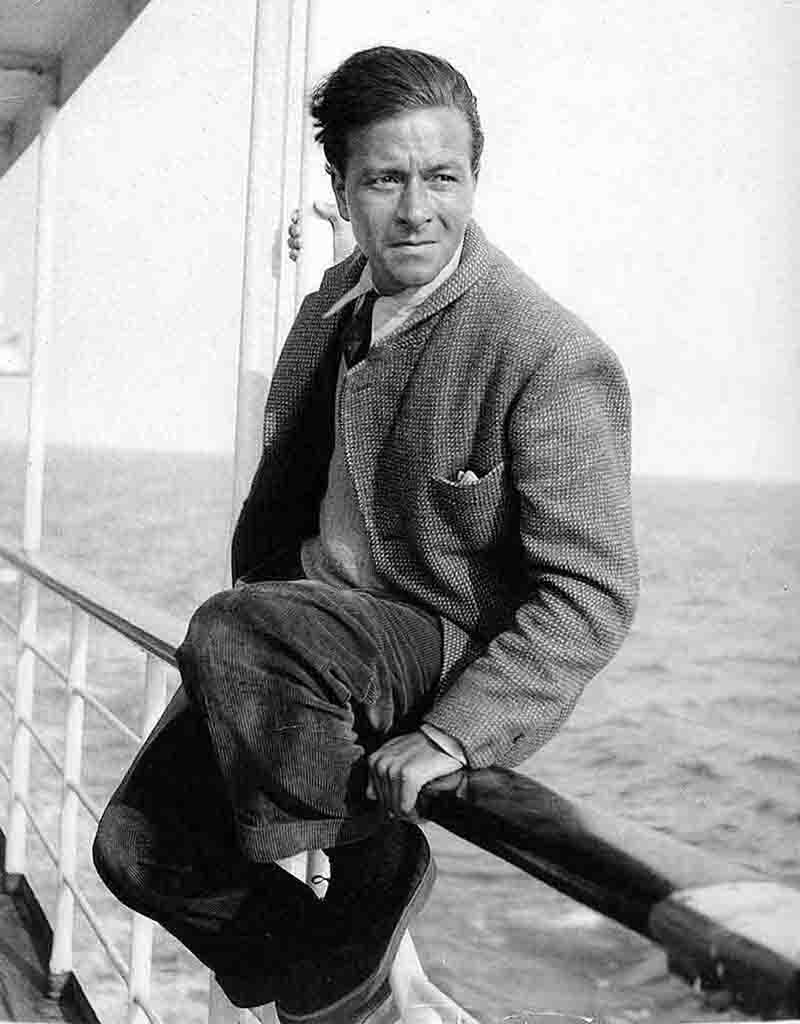
A Work that Breathes History
Bock-Schroeder's images remind us that photography bears responsibility, towards the subject, history and the truth.
Archive Bock-SchroederKey Assignments at a Glance
Selected series from the archive with historical context, primary sources for historians, curators and collectors.
| Year | Series / Assignment | Historical Context |
|---|---|---|
| 1952 | Bolivia: Coup d'État | Social unrest and political upheaval during the Bolivian Revolution |
| 1954 | Peru: Amazon & Cabo Blanco | Three-day survival ordeal in the Amazon jungle; deep-sea fishing among the jet-set elite on the Pacific coast |
| 1956 | The Soviets: USSR Reportage | First West German photographic report in the Soviet Union; 11 Soviet republics; Bolshoi Theatre, Hermitage, Trinity Lavra |
| 1956 | Suez Crisis | War reportage from Israeli and Egyptian positions, a unique binational viewpoint |
| 1956 | Celilo Falls, Oregon (MFAH) | Indigenous Chinook salmon fishing; historically significant as Celilo Falls was flooded by The Dalles Dam in 1957 |
| 1958 | Jordan: Coup Trial | Court scenes and political symbolism in the Middle East after the Hashemite massacre |
| 1959 | Alaska: Air Defense Command | Inside the US Arctic Cold War defence; Kotzebue Air Force Station |
| 1960 | Haus Doorn: Kaiser Wilhelm II | Documentation of the imperial exile in original preservation before its museum transformation |
| 1972 | Munich Olympic Games | Euphoria and the attack, the contrast of two historic moments |
| 1982 | New York City | Metropolitan change in Reagan-era America |
Mastery in Monochrome
Discover the elements that make an image iconic
Frequently Asked Questions
Fact-based answers on the biography, method, collection and market value of Peter Bock-Schroeder.
Source: Collection Bock-Schroeder · L'Œil de la Photographie
Source: Collection Bock-Schroeder · Wikipedia
Source: Collection Bock-Schroeder documentation
Source: Collection Bock-Schroeder · the-soviets.com
Source: Collection Bock-Schroeder provenance policy
Source: L'Œil de la Photographie · Collection Bock-Schroeder
Source: Collection Bock-Schroeder · MFAH Houston · Liechtenstein Collections
Source: Collection Bock-Schroeder editorial documentation
Source: Collection Bock-Schroeder archive documentation
Source: fotografiekunst.com · Collection Bock-Schroeder