Brigitte Bardot Brigitte Bardot (born September 28, 1934, in Paris; died December 28, 2025, in Saint-Tropez) was a French actress, singer, model, and animal rights activist. She rose to international fame in 1956 with Roger Vadim's film And God Created Woman, becoming a defining sex symbol and style icon of postwar European cinema. Over a 21-year film career (1952–1973), she appeared in 47 films, including Jean-Luc Godard's Contempt (1963). In 1973 she retired from acting and, in 1986, founded the Fondation Brigitte Bardot, dedicating the rest of her life to animal welfare advocacy.
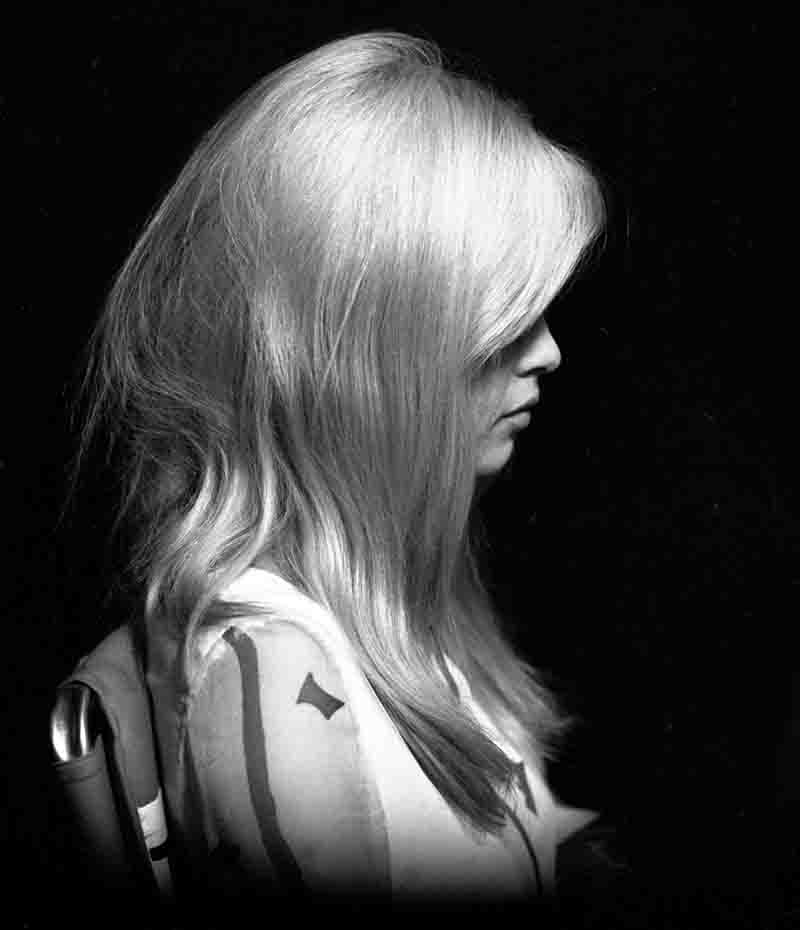
Brigitte Bardot's iconic style
These rare images showcase Bock-Schroeder's technical mastery and his ability to connect with his subjects. The black-and-white format lends the photographs a timeless quality, and Bardot's expressive face and pose convey drama and intensity.
Bardot was one of the most popular and influential actresses of the 20th century, and these portraits are a testament to her enduring appeal as much as to Bock-Schroeder's skill as a portraitist.
Brigitte Bardot, known in her native France as "BB", was an actress, singer, dancer and model who later became involved in animal welfare. At 15 she left school and began working as a model. She became famous in 1955, when she appeared on the cover of "Elle" magazine.
Her death in December 2025 marked the end of one of the last great icons of postwar European cinema.
Brigitte Bardot was an international style icon whose beauty still resonates today.
Marriage to Gunter Sachs: The Helicopter Roses of Saint-Tropez
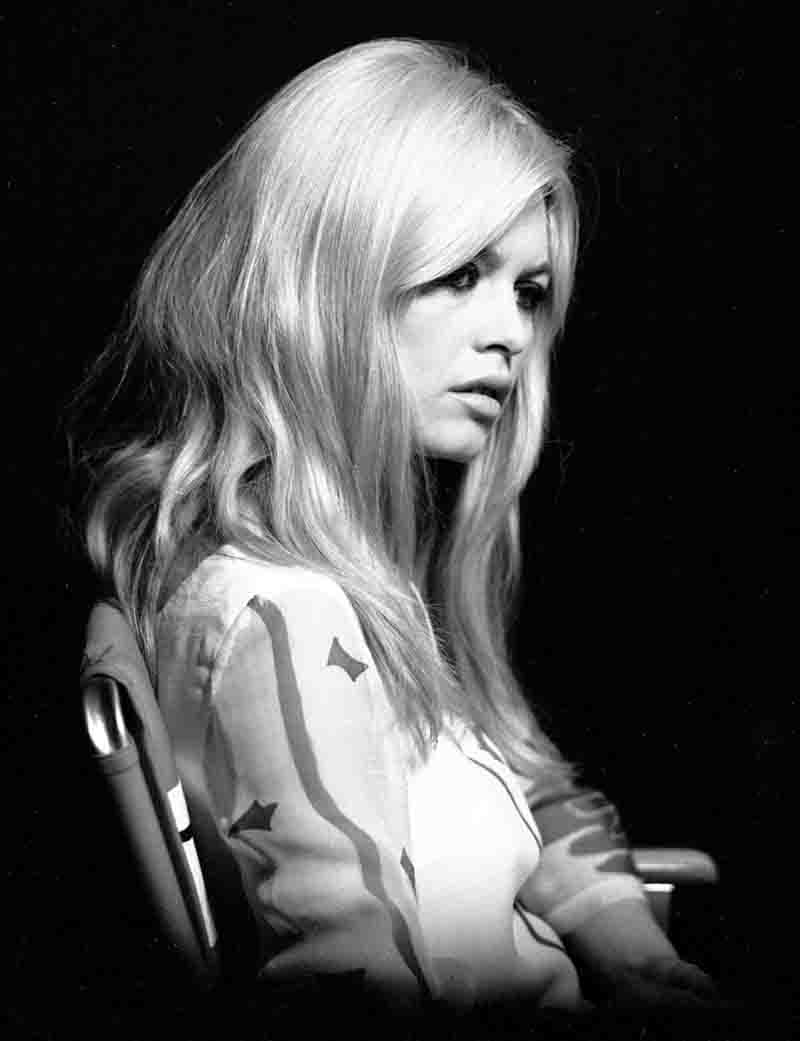
Few relationships shaped the Bardot myth as much as her marriage to Gunter Sachs, the German-Swiss industrial heir and photographer. In 1966, Sachs courted her with one of the most famous gestures of the European jet set: hundreds of roses dropped from a helicopter over her villa in Saint-Tropez. On his recommendation, Peter Bock-Schroeder was also given access to the film set to photograph her, the origin of these rare images.
"I have loved much and passionately. That is my nature." — Brigitte Bardot
Brigitte Bardot is the quintessential French actress.
Her undeniable sex appeal, paired with inner strength and a certain vulnerability, make her a fascinating figure on both a personal and artistic level. She was once called "the most beautiful girl in the world"; to some she is the goddess of the 60s, to others one of the most significant film actresses of her generation.
Biography timeline: Brigitte Bardot in key dates
One of the 20th century's most enduring icons
Selected filmography
- 1956And God Created Woman
- Directed by Roger Vadim. Bardot's international breakthrough.
- 1960The Truth
- Directed by Henri-Georges Clouzot. David di Donatello Award for best foreign actress.
- 1963Contempt (Le Mépris)
- Directed by Jean-Luc Godard. Now celebrated as a masterpiece of the Nouvelle Vague.
- 1965Viva Maria!
- Directed by Louis Malle, co-starring Jeanne Moreau. BAFTA nomination.
- 1973Colinot Trousse-Chemise
- Her final feature film before retiring from acting, film No. 47.
Bardot was a self-declared favourite of the camera lens and remains one of the most photographed women in the world. This rare, private selection of images offers an intimate look at her personality off-screen.
Brigitte Bardot was breathtaking, tall, blonde, curvy, with pouty lips and a sleepy gaze, she embodied the cliché of French sensuality in mid-century cinema.
Animal welfare activism and political controversies
In 1986, using proceeds from the auction of her private possessions, Bardot founded the Fondation Brigitte Bardot, which continues to work for the protection of abused animals to this day. She campaigned publicly against the Canadian seal hunt, against horse meat consumption, and for a ban on unstunned ritual slaughter.
At the same time, Bardot was one of France's most controversial public figures: between 1997 and 2021, she was convicted six times of inciting racial hatred, and publicly supported Marine Le Pen in the 2012 and 2017 presidential elections, a dual legacy that remains part of her public reputation to this day.
What Film Scholarship Reveals About the Bardot Myth
Beyond the tabloid shorthand of "sex symbol," film historian Ginette Vincendeau's critical study Brigitte Bardot (BFI Film Stars series, published by Palgrave Macmillan, 2013) offers the most rigorous academic account of her stardom to date, tracing how a Paris fashion model became, in her own words, both a "revolution" and an "impossible" role model for her era.
Scholarly perspective: key findings
- Her filmography is larger, and more comedic, than the popular canon suggests: Vincendeau's count runs to 42 feature films plus several cameo roles, roughly half of them comedies that rarely feature in the half-dozen titles (Et Dieu … créa la femme, En cas de malheur, La Vérité, Vie privée, Le Mépris, Viva Maria!) that dominate most writing on her. Published tallies of her total output vary by source depending on whether cameos and shorts are included, a useful reminder to state a source's counting method rather than a bare number.
- France's first mass-media celebrity: at her peak, Bardot's global name-recognition was rivalled in France only by General de Gaulle. In 1969 she became the first celebrity invited to model for the bust of Marianne, the national emblem of the French Republic.
- A celebrity sustained beyond the screen: Vincendeau traces Bardot's fame to an interplay of film, fashion, photography, including the then-new phenomenon of the paparazzi, and a singing career launched in 1962, a combination that kept her a global presence long after her 1973 retirement from acting.
- A deliberately French star: Bardot turned down every Hollywood offer she received; her only nominally "American" film, Dear Brigitte (1965), was shot entirely in Paris.
- Adored and reviled in equal measure: even at the height of her fame, Bardot drew as much public hostility, from clergy, critics and segments of the press, as devotion, a duality Vincendeau links to her taboo-breaking depiction of female sexuality in a pre-feminist France where contraception and abortion were still illegal.
Brigitte Bardot: FAQ
The most commonly searched questions about Brigitte Bardot, answered precisely.
Bardot's former husband and art patron Gunter Sachs
Explore how Gunter Sachs, renowned art patron and former husband of Brigitte Bardot, influenced 1960s culture and photography.
About Gunter Sachs →